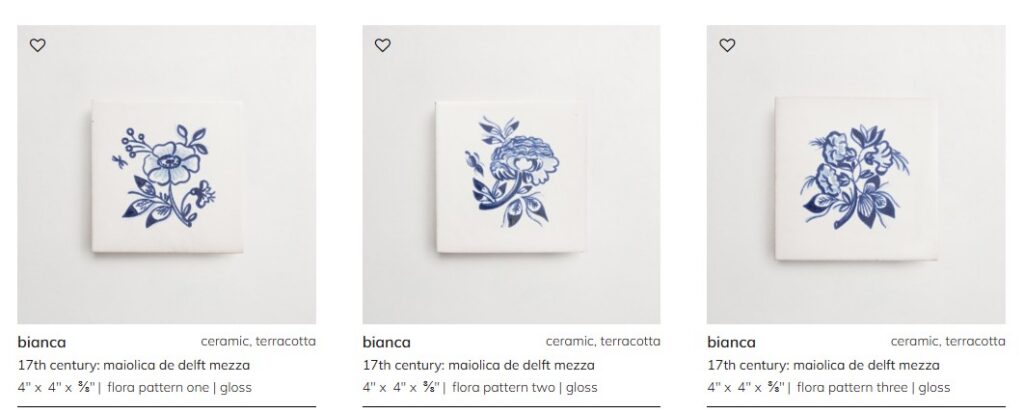
The appeal of rural living in the countryside continues to play out in interiors, with pastoral kitchens and cottage style surging in popularity as a respite from a modern world consumed by technology. Delft tile is also experiencing a revival in kitchens and bathrooms where the delicate blue and white motifs are popping up again as a classic choice in design.
The traditional hand-painted in blue and white tiles originated in the Netherlands in the 17th century and often feature delicate scenes of a simple life. The classic blue-on-white palette remains fresh and timeless, pairing beautifully with everything from quartz countertops to rustic wood cabinetry. Delft tiles possess an enduring quality rooted in craftsmanship and appealing to many as storytelling in small scale. Delft tiles have a long history in design, the iconic blue and white designs have been installed throughout the centuries all over Europe.
A Delft tile backsplash brings personality and artistry into a living space. It acts as both a functional surface and an appealing focal point, turning an ordinary wall into a gallery of miniature artwork. Whether arranged in a uniform pattern or mixed with coordinating tiles for a collected look, Delft tiles add a charm and warmth that appeals to homeowners who want a space that feels meaningful, layered, and European rather than modern or utilitarian.
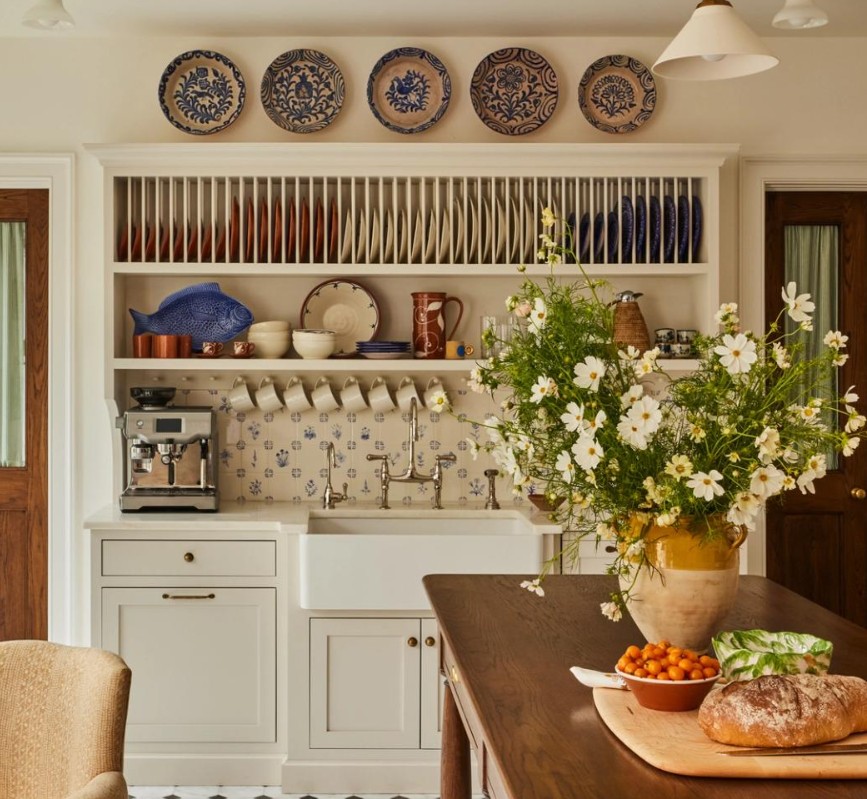
via schoolhouse
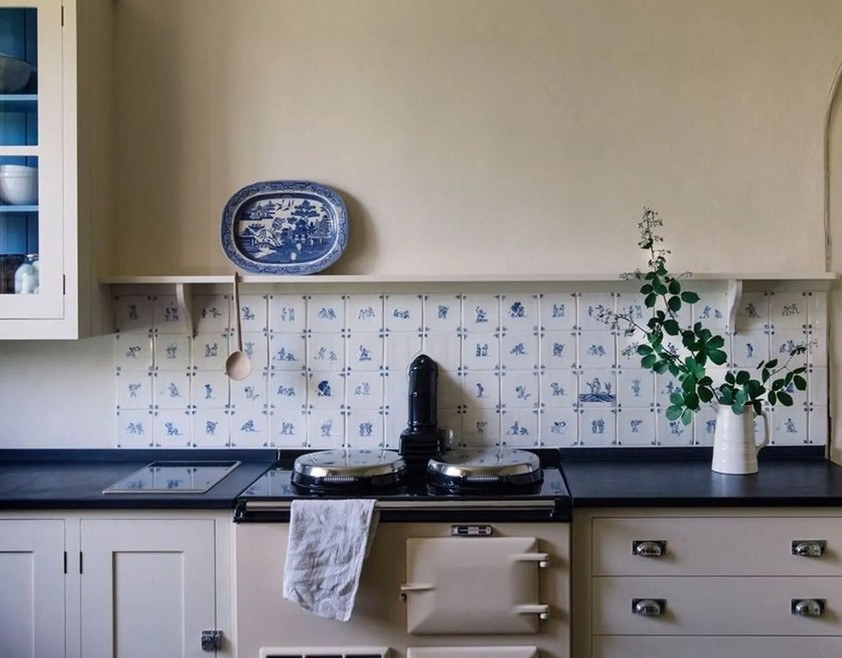
via @plainenglishdesign
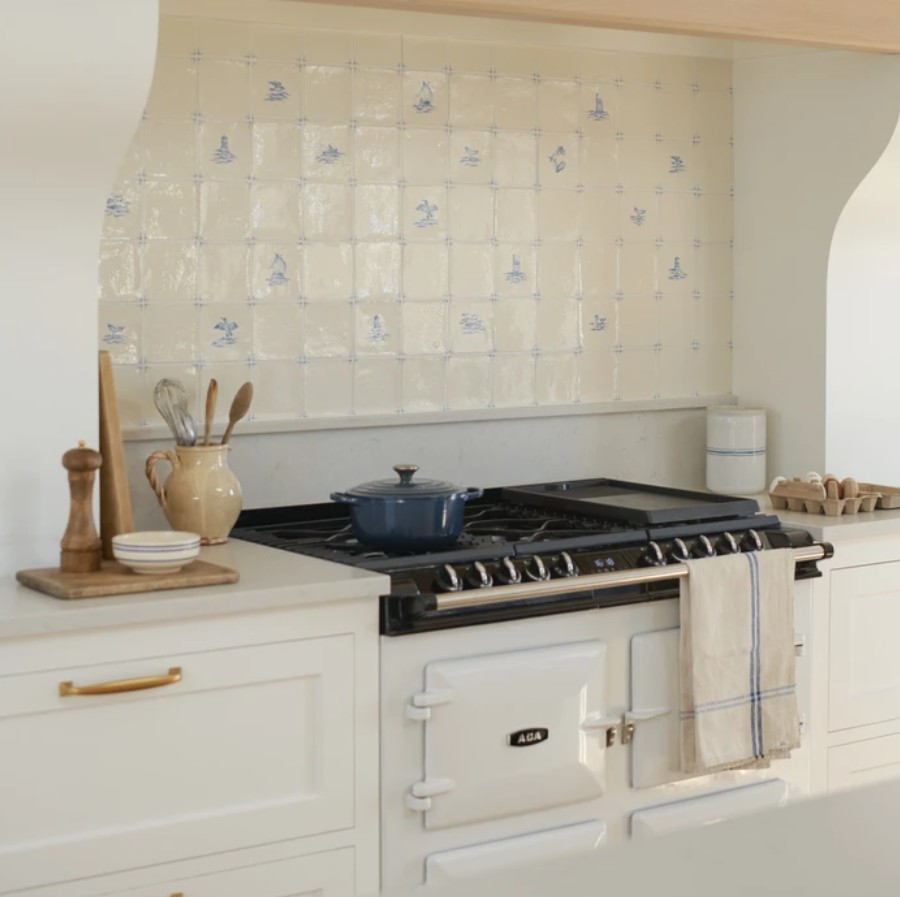
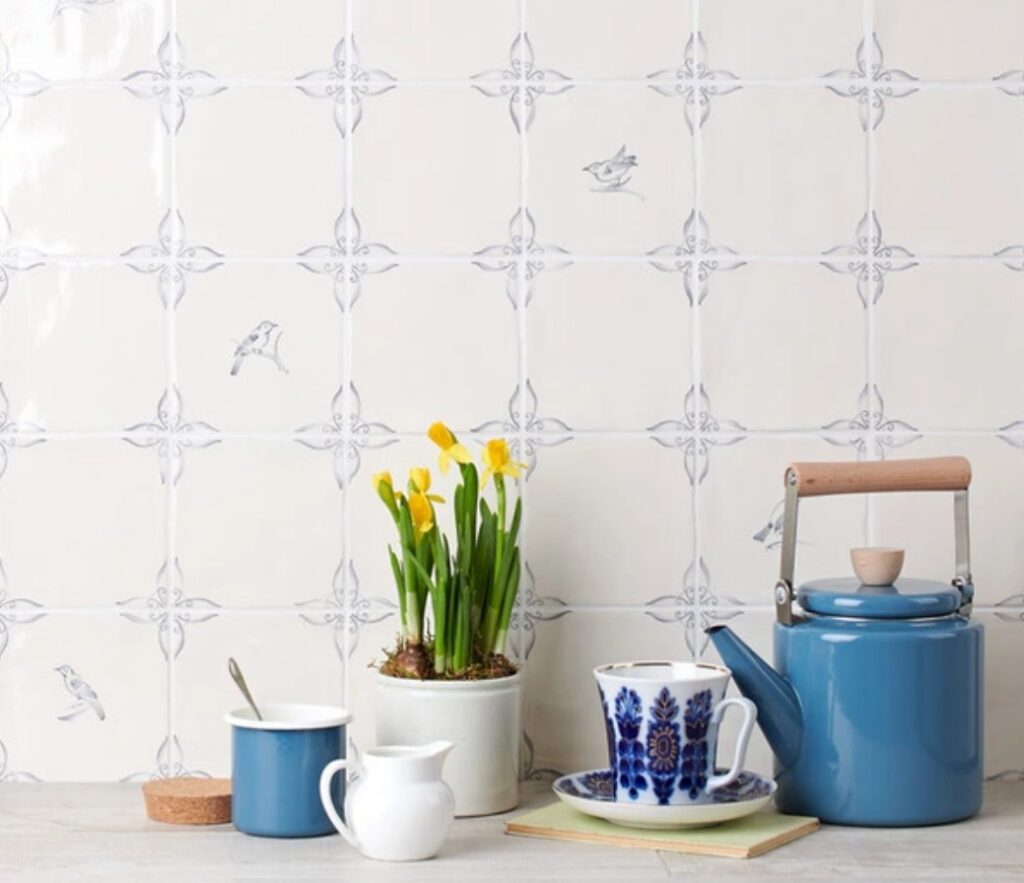
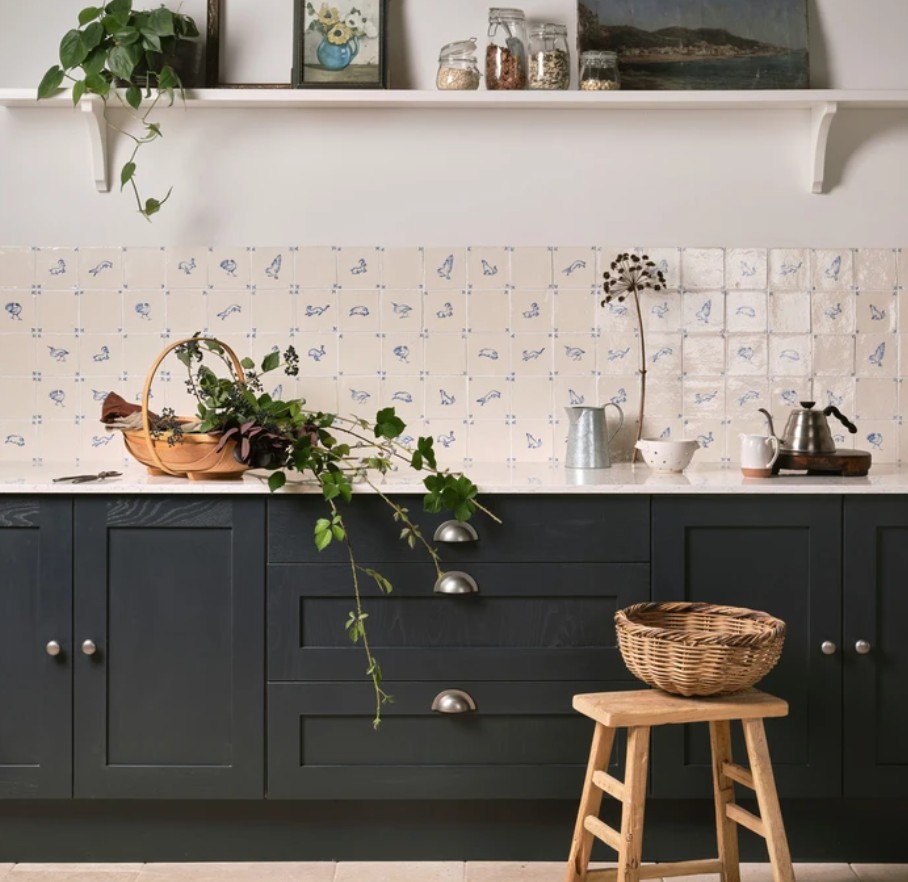
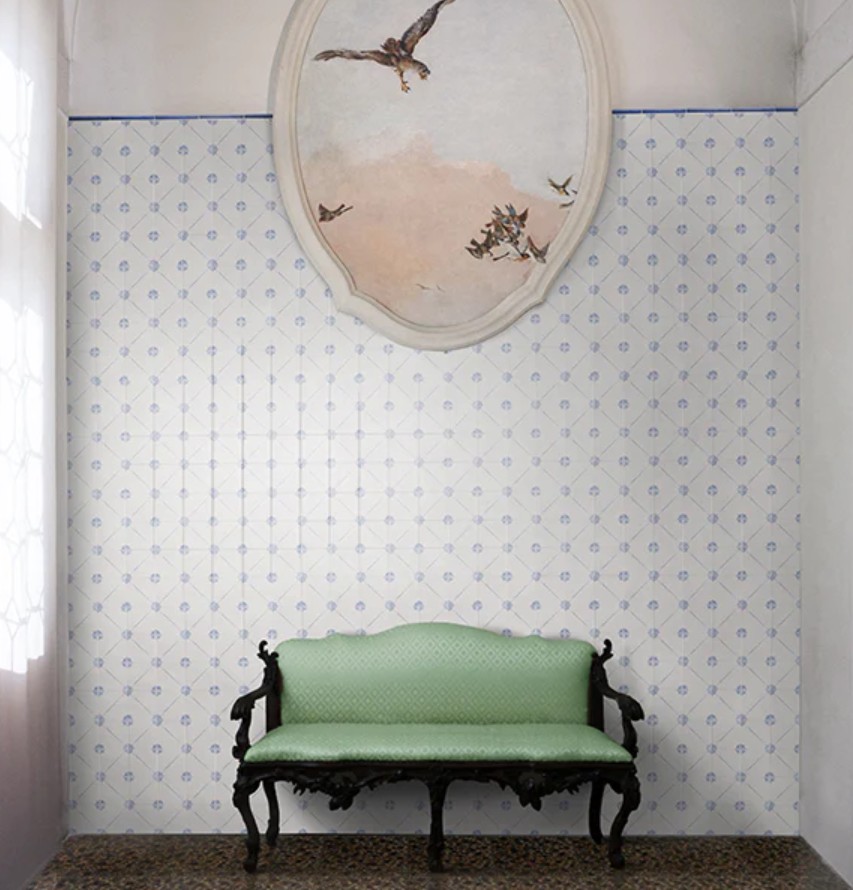
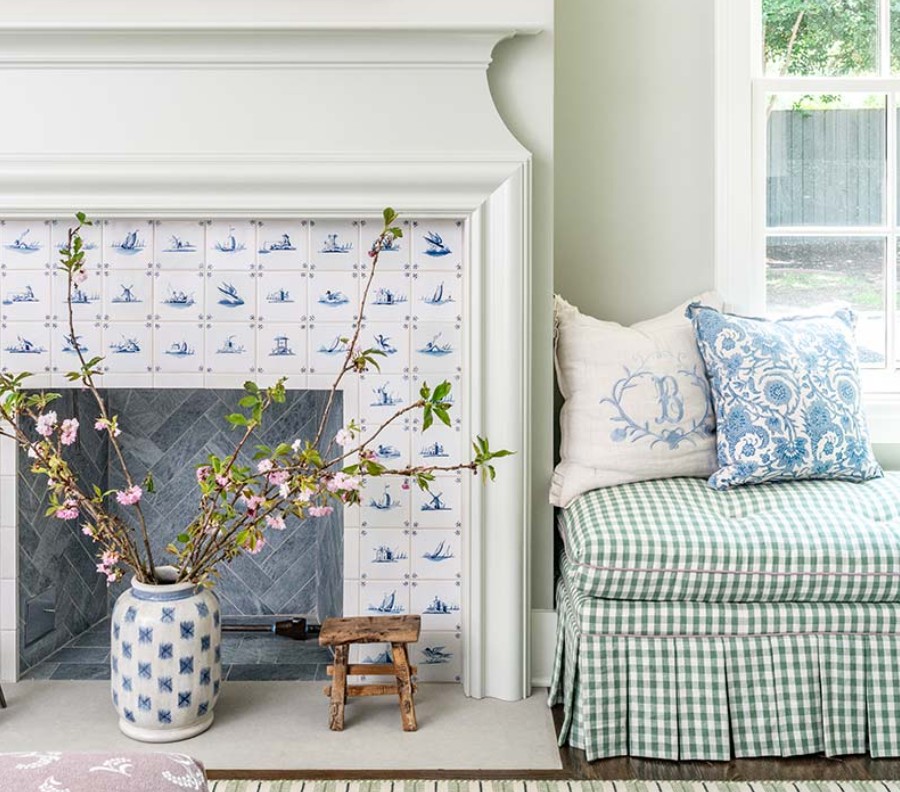
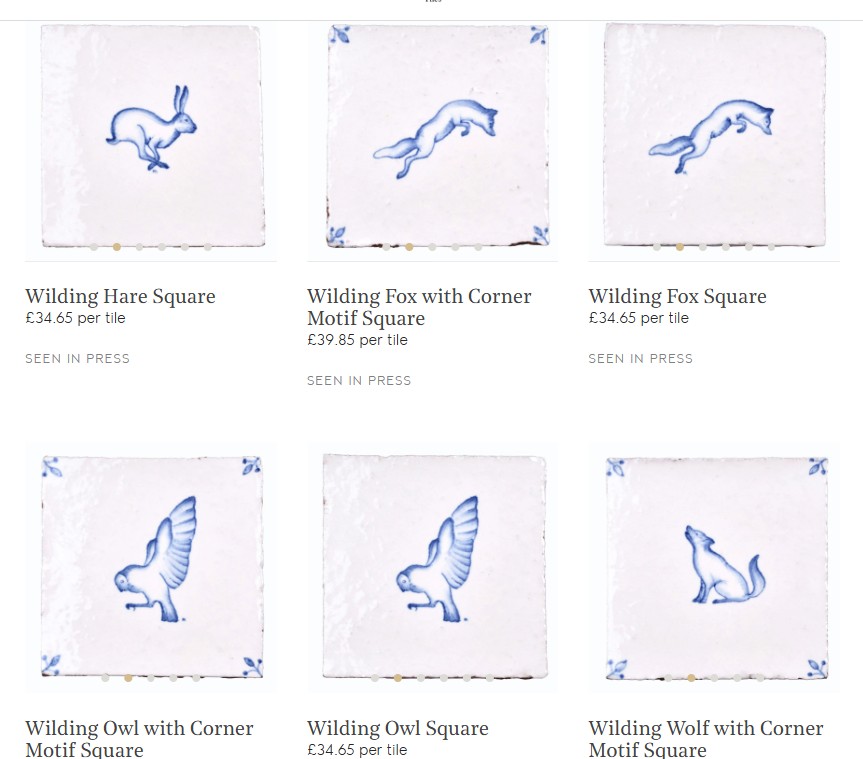
Delft tiles often feature delicate scenes of pastoral life including botanicals, miniature animals, geometric borders, or thematic elements like ships and biblical motifs.
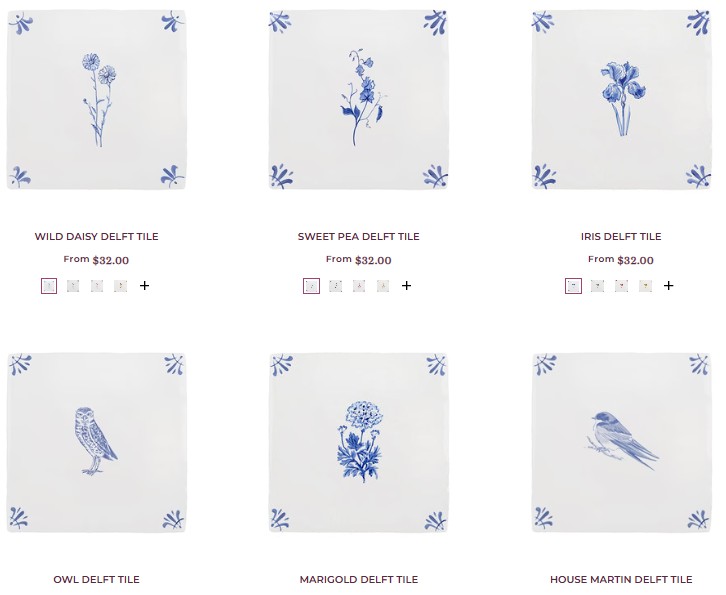
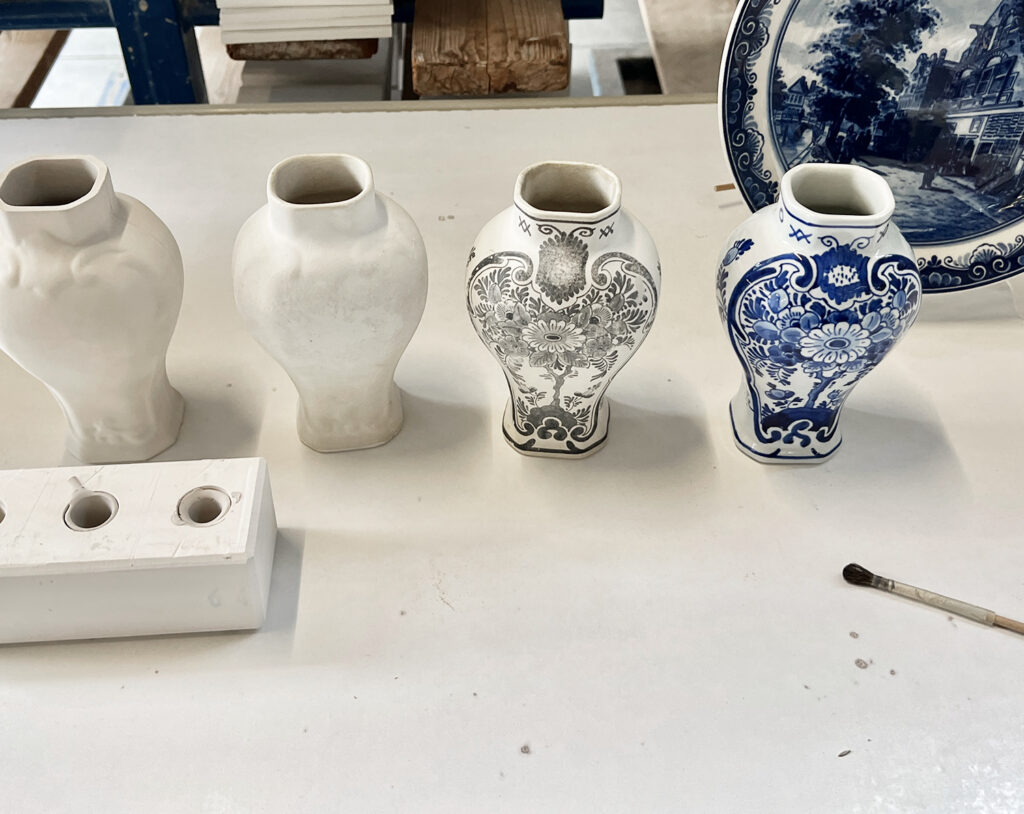
Where does the iconic blue color come from you might ask? Its source is an oxide applied to bisque ceramics. The story below:
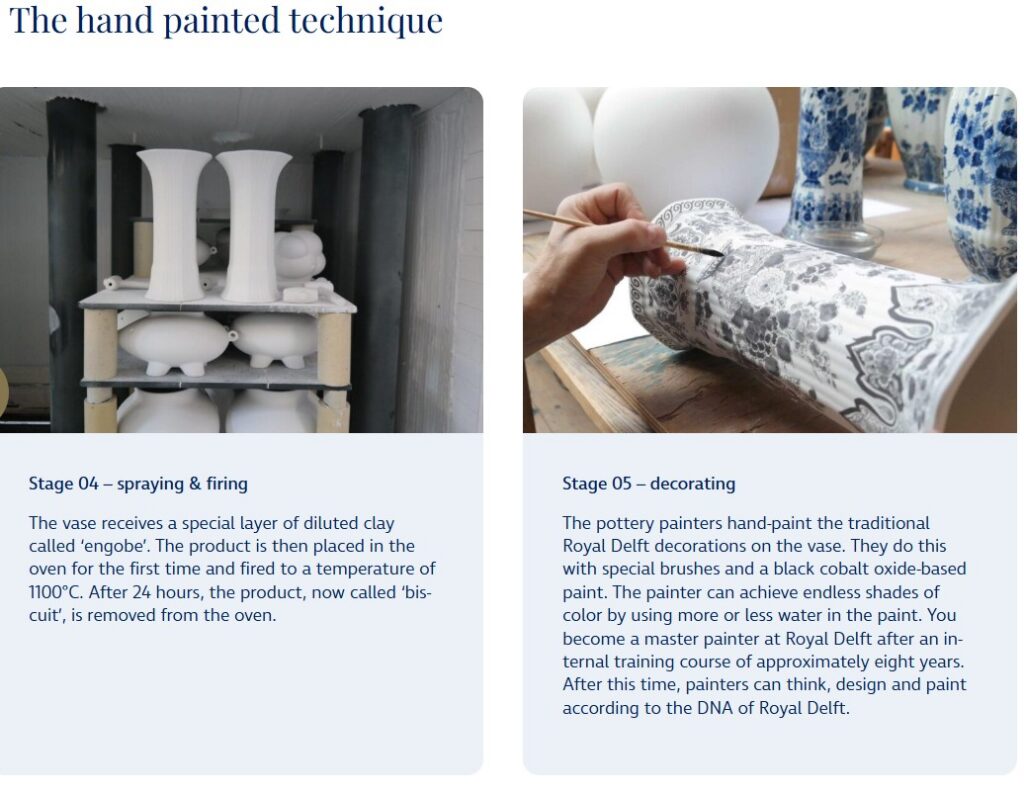
How is hand painted Delft Blue made? The craftsmanship is explained on their site:
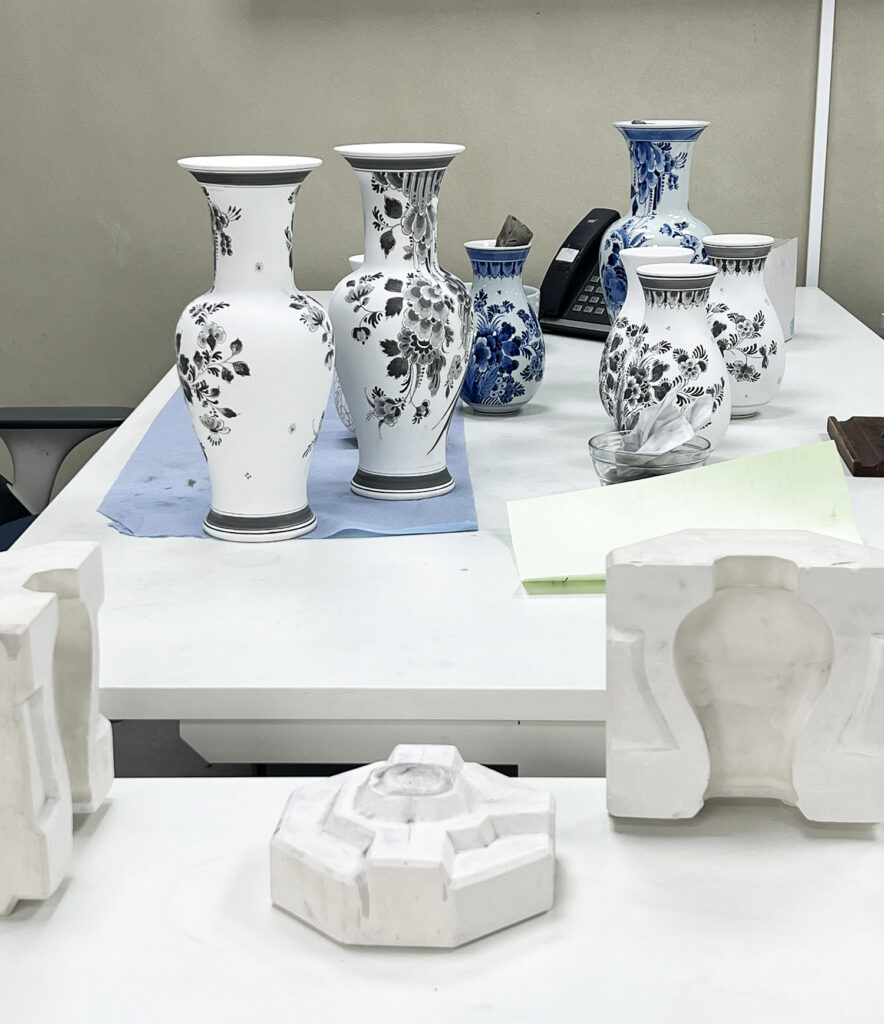
The origin and core of Royal Delft is hand-painting high-quality Delft Blue ceramics. Decorating begins with applying the contours with charcoal, after which the pottery painters apply the details freehand with special brushes made of sable and squirrel hair. The paint is water-based and the color nuances are created by mixing the paint more or less with water. The Delft Blue decor is painted with a dye mixture that largely consists of cobalt oxide according to a centuries-old recipe. Due to chemical reactions during the baking process, the painted pattern changes color from black to the iconic blue.
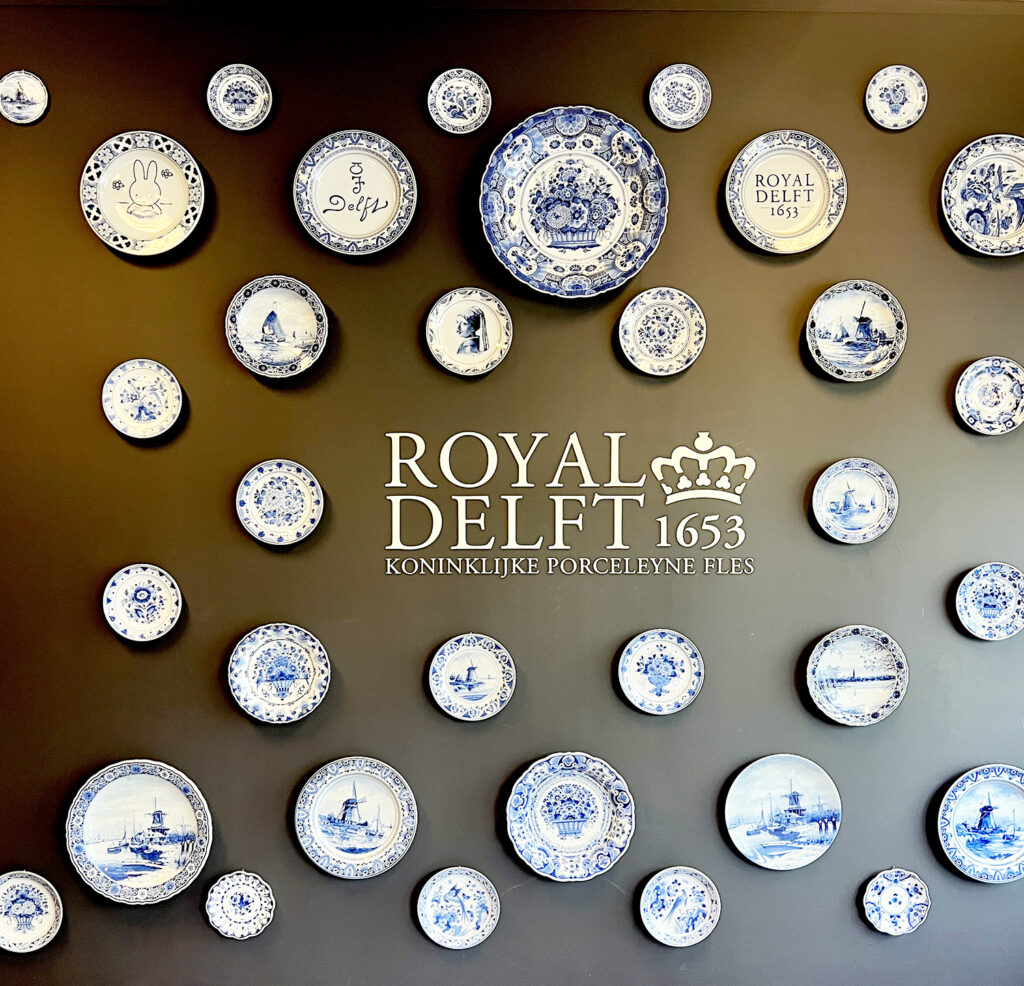
A deeper dive into the tile scene includes a visit to the picturesque city of Delft, famous for its charming canals and historical facades, like many other cities in Netherlands. Delft is the birthplace of the world-famous ceramics.
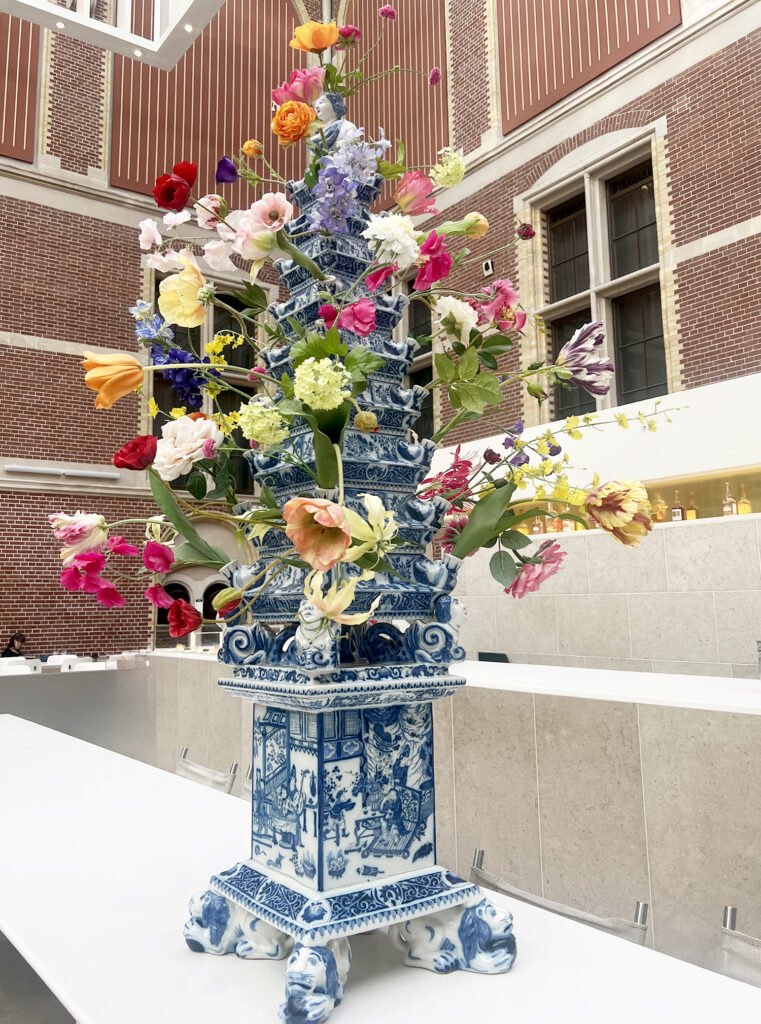
From Amsterdam, I hopped on a train, and walked from the station to the production house where I took the tour and browsed the impressive shop. Inside are all kinds of collectibles including the iconic tulip pyramids, a structural design that dates back centuries.
Pay for the tour, and you can walk around inside their facility from station to station to see the entire creation process play out behind the scenes.
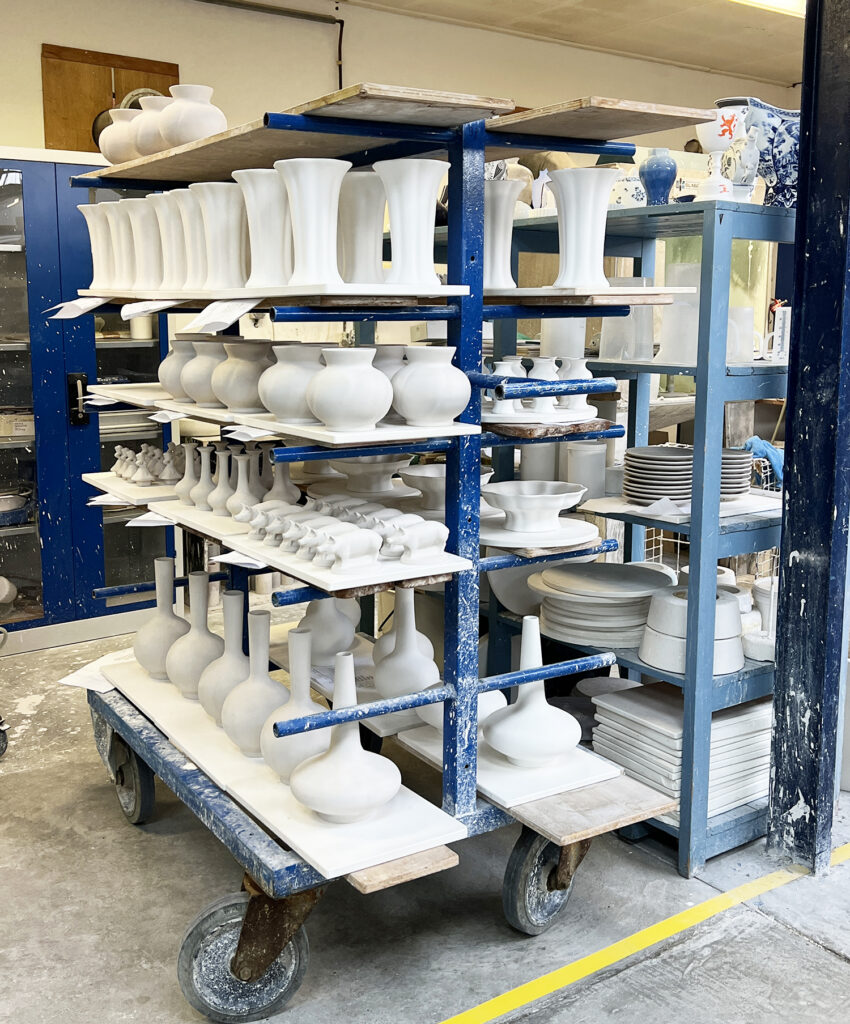
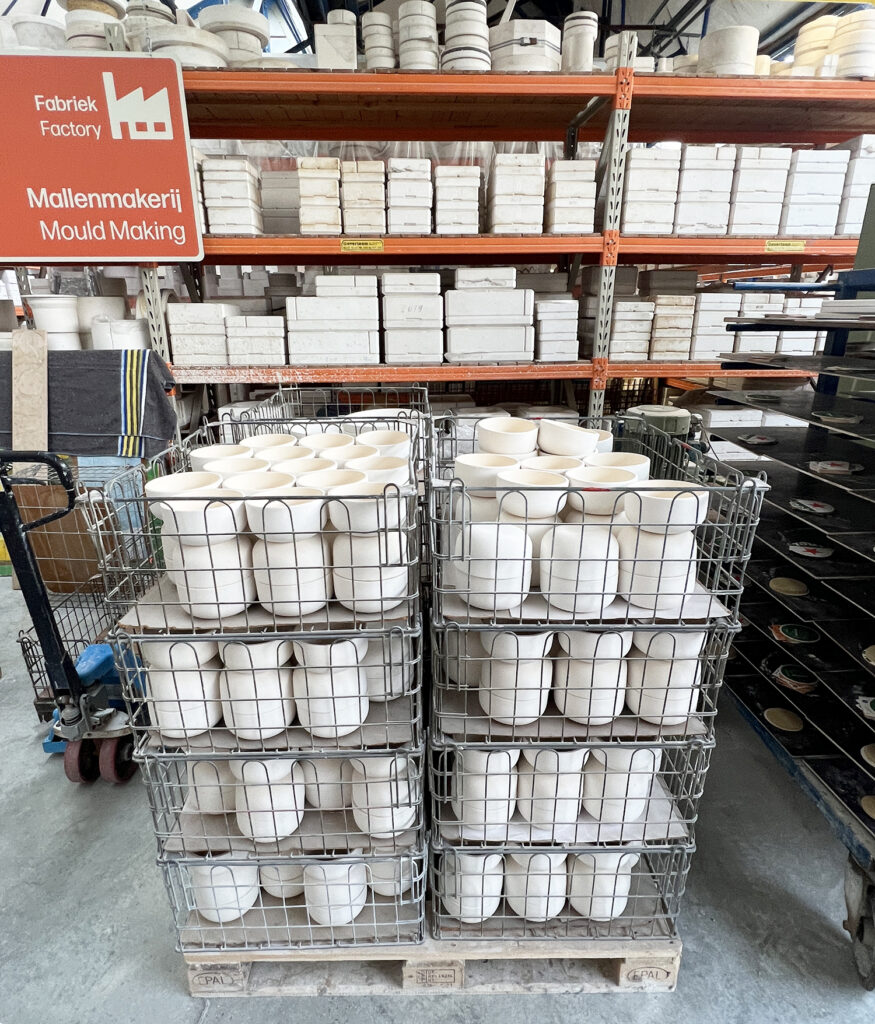
It was most interesting observing the in-house artisans creating classic designs on porcelain and bisque using the dark oxide paint. Once fired the motifs transform under heat into the iconic blue Delft is famous for.
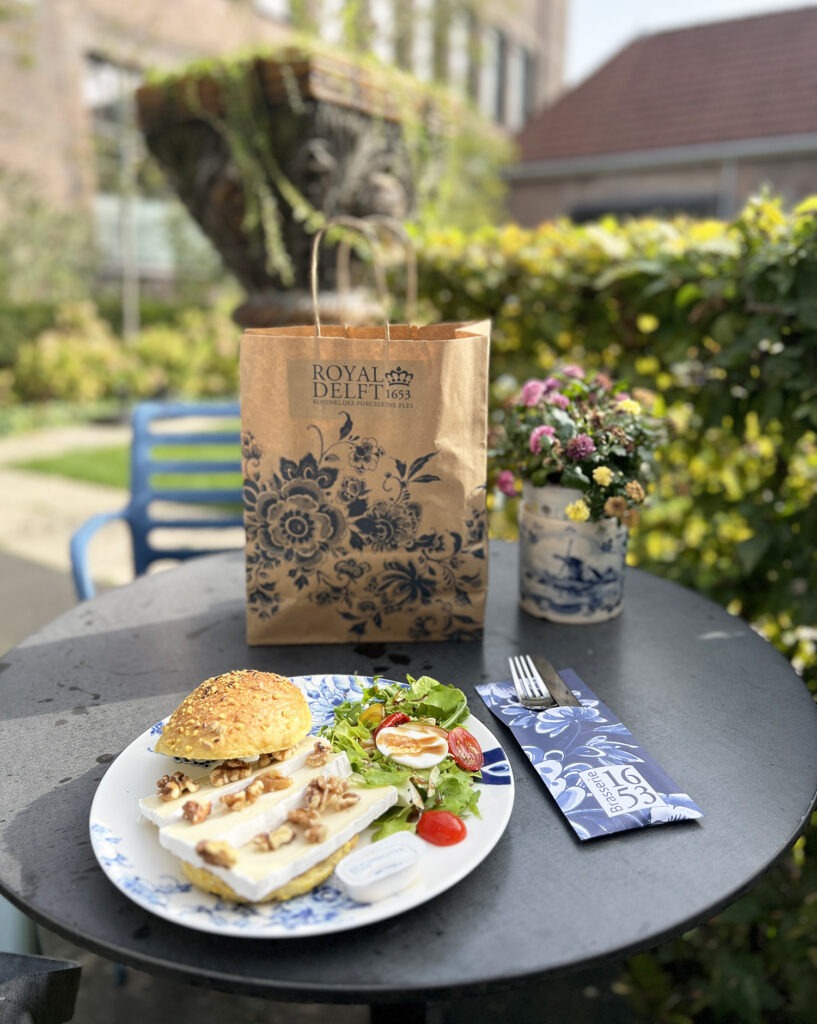
Once you’ve selected something to bring home, don’t miss the lovely flower filled courtyard where you can enjoy a light meal before heading out to walk around the town.
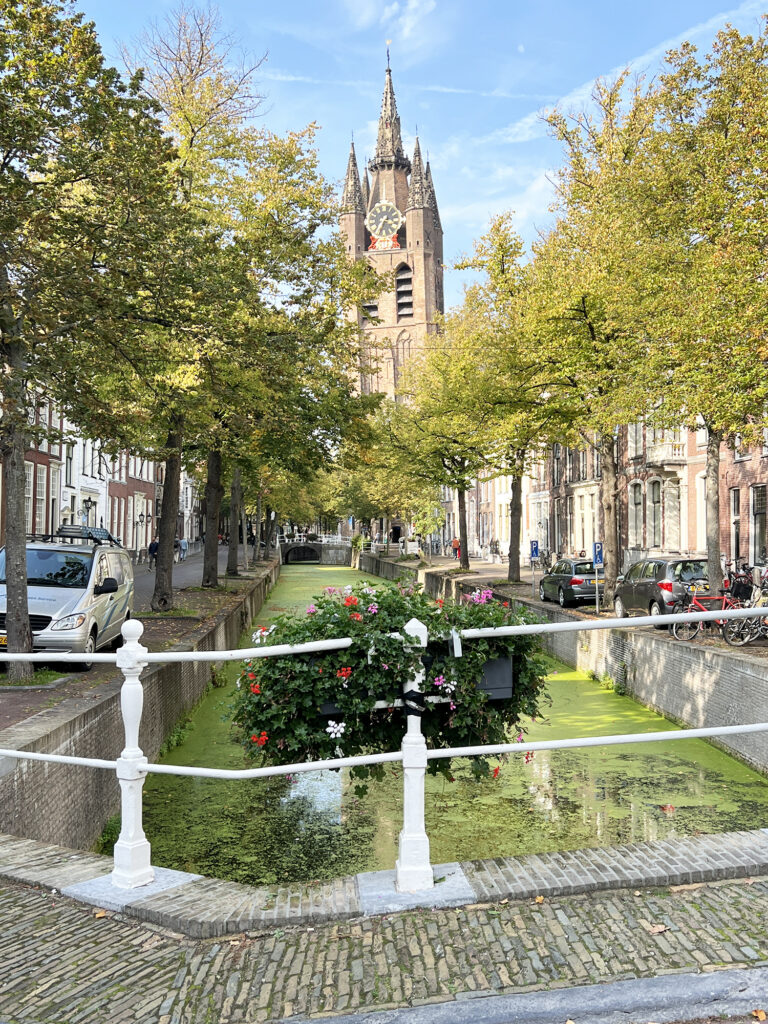
Delft is the charming small city, walkable like so many others, and lovely for spending a few hours strolling around and seeing the sites. It is easy to get there by train in less an hour from Amsterdam which makes Delft a delightful day trip.

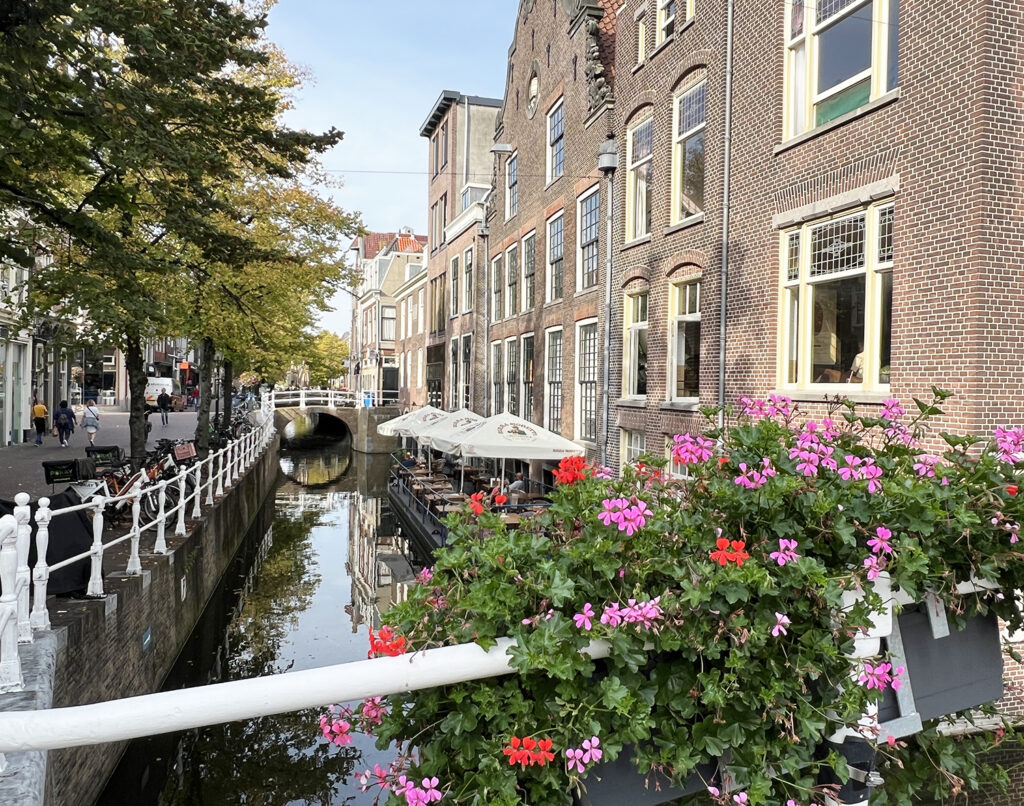
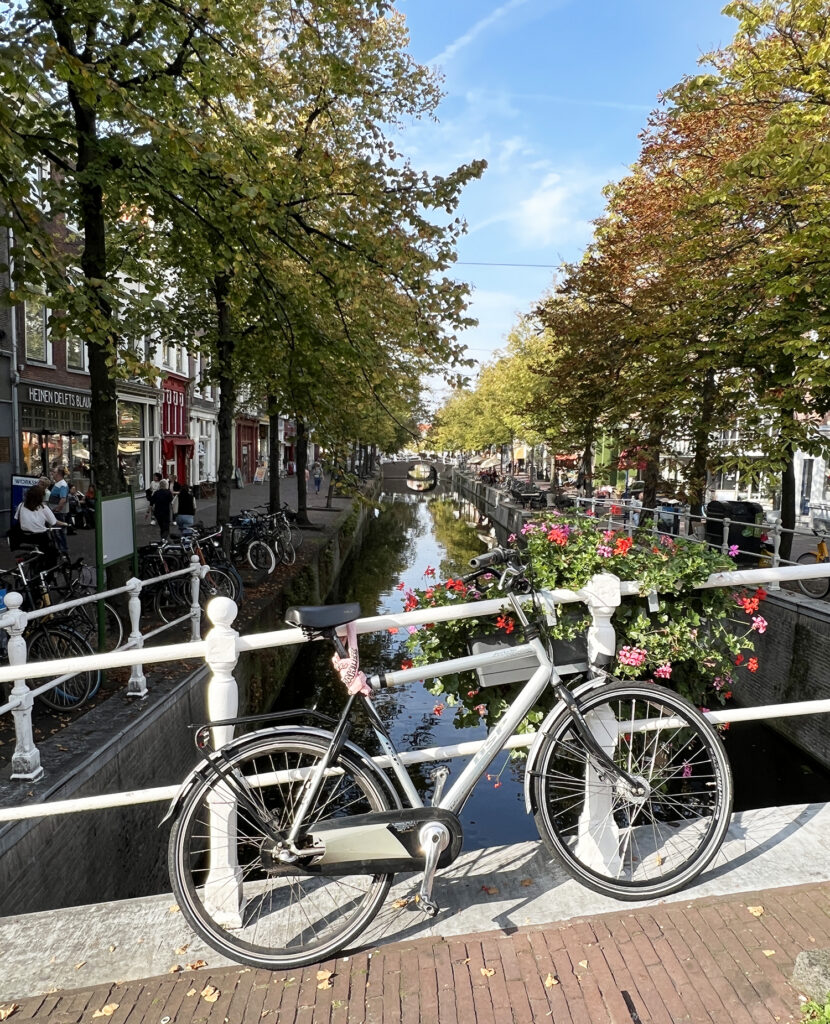
Many people like to travel to Netherlands in spring for the floral displays however the destination is equally as charming in fall. Have you ever spent autumn in Amsterdam?



So beautiful! I traveled to Amsterdam and then into northern Germany as far as Hamburg many years ago. We have many fond memories of the trip.
I always enjoy your travel posts and have later visited sites you wrote about including Provence and Copenhagen. Your photos are inspiring!
Thank you Kim that is very kind! I love that region of Europe you mentioned and how lovely that you visited places I’ve mentioned on the blog, that makes me so happy. :)