While shopping my local garden center I stopped short when I spied an entire shipment of hellebores in all different varieties that had just arrived. I’ve long admired these blooms but hadn’t purchased any for my garden in the past. I couldn’t resist their allure, bought two plants, and promptly planted in them in pots when I got home. In the fall, I’ll move them into the ground.
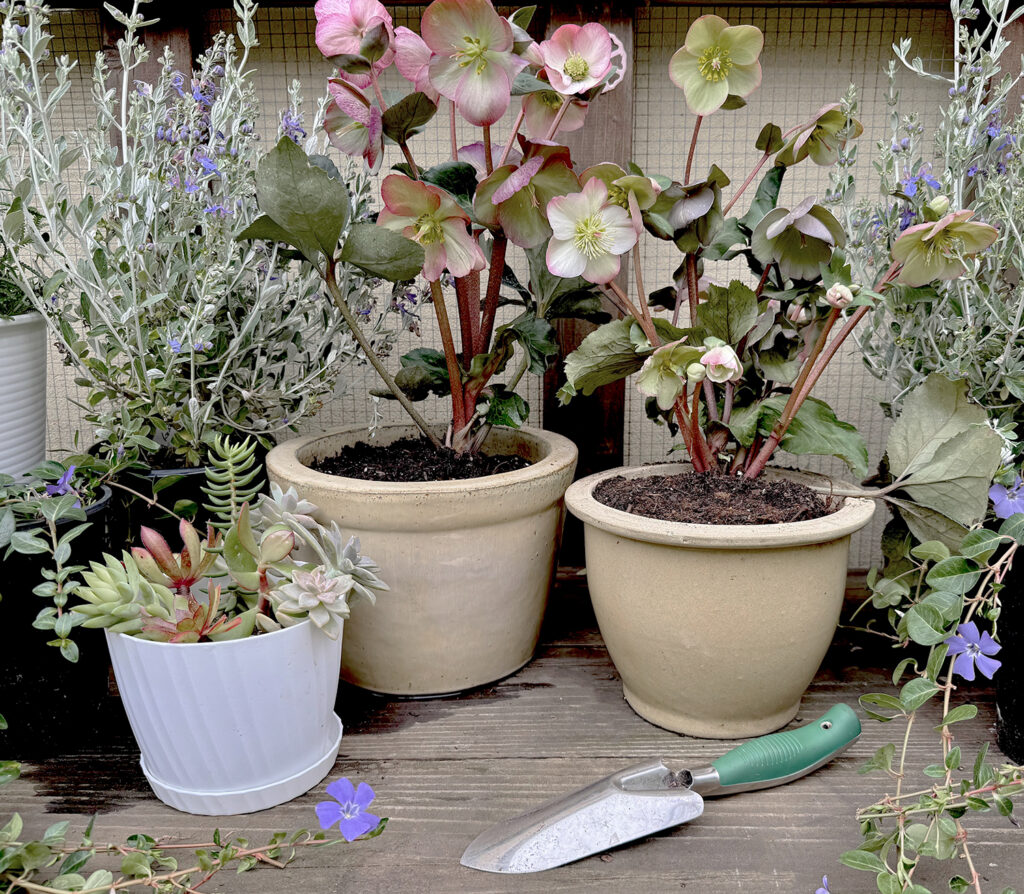
These magical cup shaped blooms belong to a special club. Hellebores bloom in winter which increases their appeal because their blossoms arrive long before other perennials bloom in spring.
Often called Lenten roses, or Christmas roses, hellebores bloom when much of the landscape is still shaking off winter. Planting hellebores in your yard feels like an act of optimism, as they are a reminder that spring will come, no matter how long winter lingers.
In many regions, their nodding flowers appear as early as February. Like snowdrops, they will push through frost and snow. At a time when color is scarce and cabin fever runs high, hellebores deliver pinks, creamy whites, inky purples, and speckled patterns at the perfect time, when most of us are over and done with the cold and longing for spring to arrive.
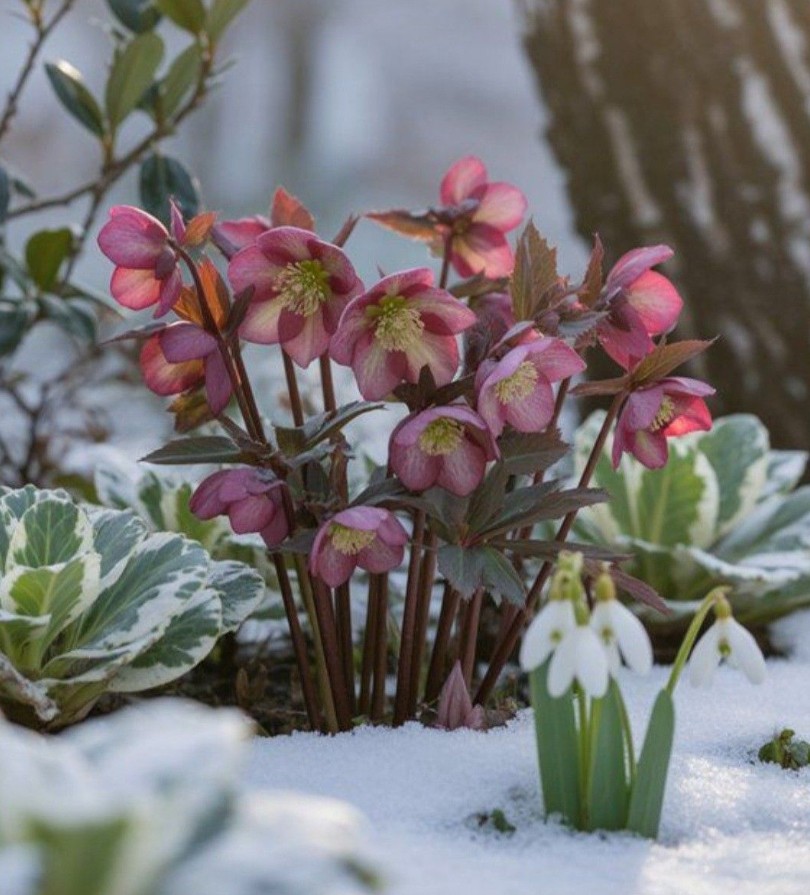
Hellebores fit nicely in real-life gardens. They are hardy in a wide range of climates (USDA Zones 4–9), thriving in woodland settings beneath deciduous trees where they receive winter sun and summer shade. Once established, they are drought-tolerant and deer-resistant, two major advantages for suburban and rural gardeners alike.
Unlike fussier perennials, they ask for little more than well-drained soil and an annual trim of old leaves, rewarding minimal effort with months of long-lasting blooms that also make the most elegant cut flowers.
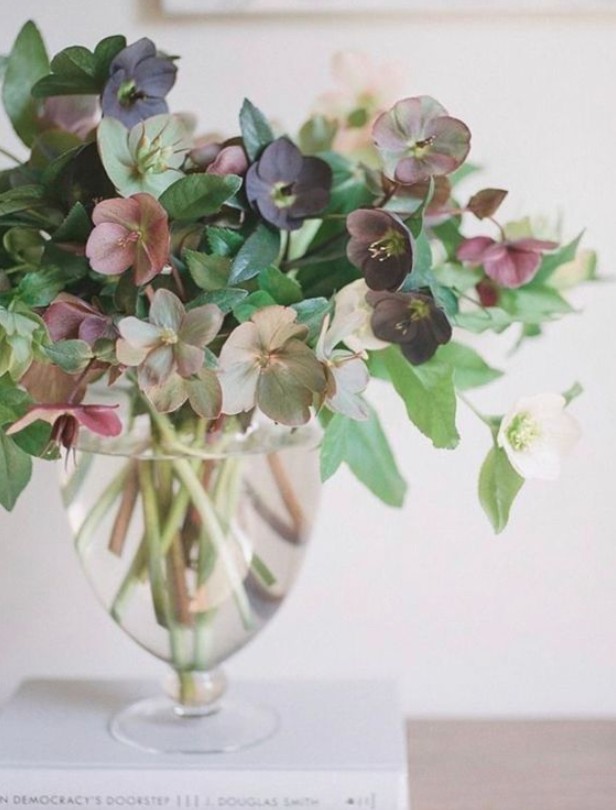
Hellebores offer a sense of continuity as their evergreen foliage anchors foundation beds year-round, and their early blossoms provide nectar for emerging pollinators. They also make fantastic cutting flowers to lift spirits on a cold day!
In an era when outdoor spaces double as sanctuaries, these resilient bloomers offer understated beauty, perfectly suited to gardens in all designs, from New England cottages to West Coast courtyards. Hellebores can be grown in containers for a couple of years in the right conditions. When planted, they thrive in woodland or shade gardens, under trees or canopies.
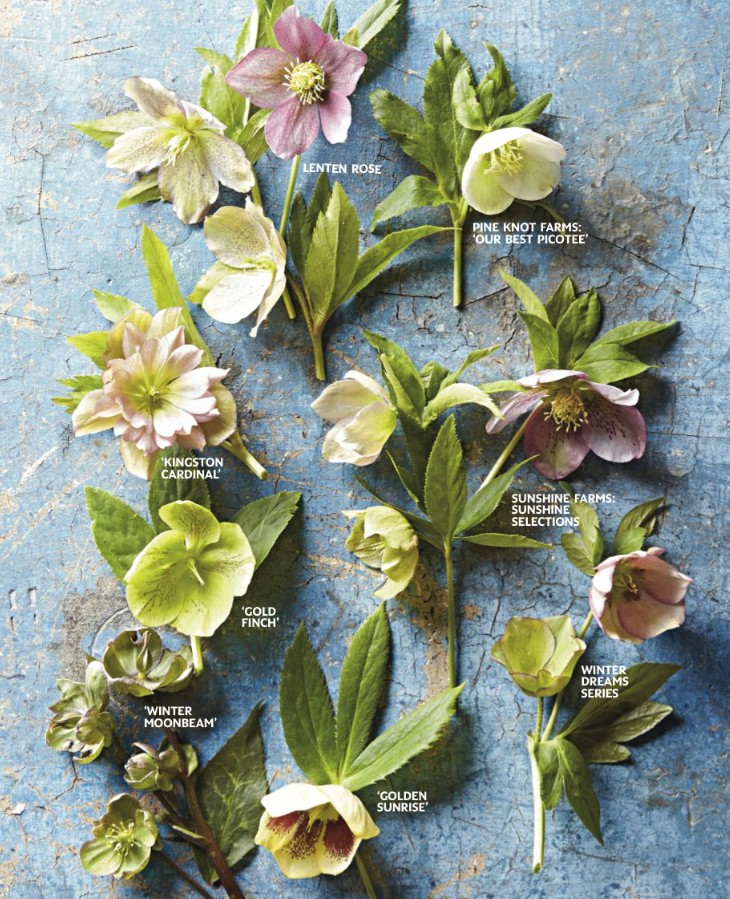
The Hellebore, or Lenten Rose, is available in many varieties, as hybridization has expanded the plant’s palette. Styles include single and double blooms.
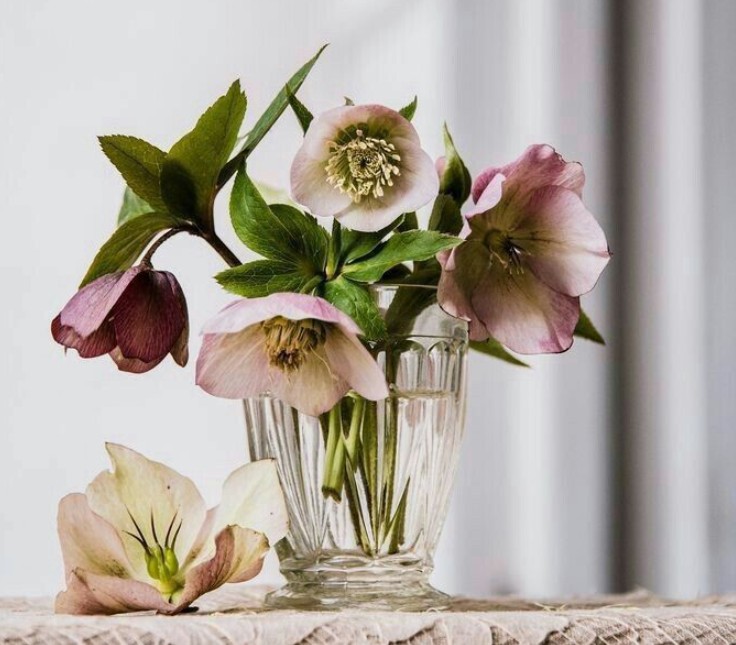
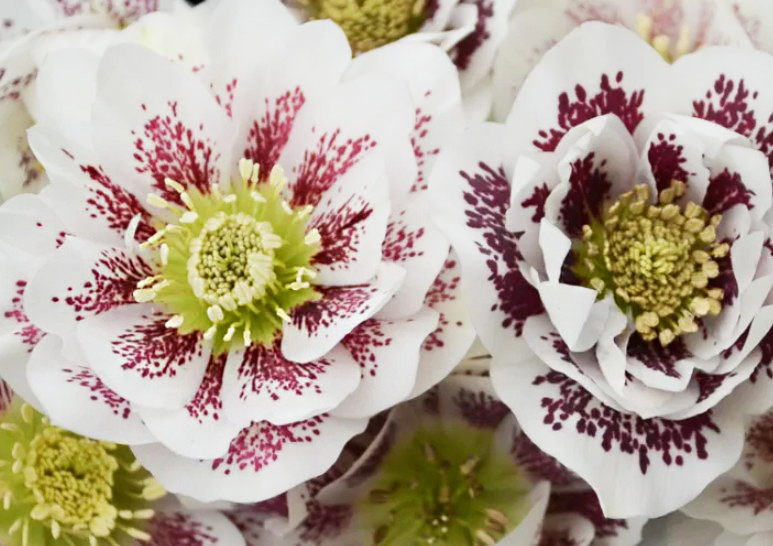
I chose ‘Anna’s Red’ for its burgundy hue, the flecked white ‘Cheryl’s Shine’ for its pattern with the goal of creating sweet bouquets around the house like this.
Below are a few informative articles sourced from the web:
1. Where to Plant Hellebores for the Best Flower Display
2. How to Grow the Harbingers of Spring
3. When to Plant Hellebores in Your Garden
4. How to Grow Hellebores so they Last All Winter
5. Hellebores, the Winter Champion


Such a beautiful and inspiring read, Kate! 🌸 Hellebores truly feel like nature’s quiet promise that brighter days are ahead. I love how you described them as an act of optimism—there’s something so comforting about blooms that push through frost and snow when everything else is still dormant.
Your plant choices, especially ‘Anna’s Red’ and ‘Cheryl’s Shine,’ sound absolutely stunning—those rich tones and delicate patterns must make the most elegant indoor bouquets. It’s also refreshing to see how low-maintenance yet rewarding hellebores are, especially for gardeners looking to add winter interest without extra fuss.
This post definitely makes me want to add a few hellebores to my own garden (or at least start with containers like you did!). Thanks for sharing such a lovely reminder that even in the coldest months, beauty is still quietly blooming.
The resilience of hellebores serves as a gentle reminder that life stirs even in the depths of winter. These “Christmas Roses” offer a sophisticated touch to the garden while requiring very little maintenance from the busy homeowner.
How do you value plants that provide both evergreen structure and early food for pollinators in your own green space?
A reminder to be careful if you have little children or pets around, hellebores are poisonous.